Tuesday, 13 November 2018

Dagga in Sectional Title Schemes

Decriminalisation of cannabis – Residential Housing Estates and Sectional Title Schemes

Decriminalisation of cannabis – Residential Housing Estates and Sectional Title Schemes
12 Nov 2018
On 18 September 2018 in an important right to privacy judgment the Constitutional Court (“CC”), decriminalised:
  • the use or possession of cannabis by an adult in private; and
  • the cultivation of cannabis by an adult in a private place for his or her personal use in private. It is important to note that the CC has not restricted the possession, use or cultivation of cannabis to an adult person’s home or dwelling, holding that “there are other places other than a person’s home or a private dwelling where the prohibition of the use or possession or cultivation of cannabis would be inconsistent with the right to privacy if the use or possession or cultivation of cannabis was by an adult in private for his or her personal consumption in private.”
The judgment has created several far-reaching consequences concerning what may be permitted in respect of the possession, use and cultivation of cannabis.

What is permitted?

The “right to privacy entitles an adult person to use or cultivate or possess cannabis in private for his or her personal consumption”. The right to privacy applies to all adult persons and the scope of privacy is only subject to limitation when an individual enters into relationships with persons outside of his or her intimate sphere and his or her activities acquire a social dimension.

Possession

An adult person enjoys the right to possess small amounts of cannabis in private for his or her personal use. Selling, purchasing or “dealing” in cannabis remains a criminal offence.
While the determination of the total allowable amount of cannabis for personal consumption has been left to Parliament, the amount of cannabis in the possession of or cultivated by an adult must reasonably be an amount suitable for personal consumption only.

Use

An adult person may use cannabis in the privacy of his or her own home or dwelling, however, “the use, including smoking, of cannabis in public or in the presence of children or in the presence of non-consenting adult persons is not permitted”.
The CC has further extended the permitted use of cannabis to a private place that is not the person’s home or dwelling provided that such place is private and away from or not in the direct view of the public. For example, a private place may include a stationary motor vehicle where the engine is not running, a secluded park or a secluded room or office.

Cultivation

An adult person may cultivate cannabis for his or her personal consumption inside their home or dwelling, in their garden, on the balcony of their home or dwelling or in a private place other than in their garden, provided that such place is considered a private place.
A place that is clearly visible to the public may not be considered private. Cannabis should therefore not be cultivated in such a place.

What does this mean?

Whilst these activities are no longer a criminal offence, they are subject to limitation by the provisions of national, provincial and local legislation as well as the rules of a Home Owner’s Association, the rules of a body corporate and / or a landlord’s house rules in respect of a leased residential property, where relevant.
Where people live in closer proximity with shared spaces, such as on a residential estate or in a sectional title scheme, there may be some debate around what activities should be permitted, and where. In order to avoid disputes trustees, body corporates and landlords should consider introducing specific rules relating to the control the possession, use and cultivation of cannabis on the property in question.
It would be prudent to adopt a cautious approach to the activities that are permitted for now. Although the court has ordered an interim “reading in” to the affected legislation, it has afforded Parliament a period of 24 months to draft legislation to regulate the use, possession and cultivation of cannabis in line with the judgment. Such legislation is likely to flesh out the details of how this change will be implemented in practice.


Tuesday, 6 November 2018

Psychological disorders? Is it workplace related?

Psychological disorders? Judgment of Ockert Jansen v Legal Aid South Africa

Psychological disorders? Judgment of Ockert Jansen v Legal Aid South Africa
30 Oct 2018
Unlike physical illnesses, psychological disorders are (somewhat) intangible and their physical manifestations are often limited to the manner in which the sufferer acts. This notion carries with it the inherent risk for employers and employees alike that a psychological ailment suffered by an employee may not be immediately recognized by both parties. Once this fact does come to the attention of an employer, however, it is prudent that it appreciates the (potential severity of the) condition and responds appropriately. The case of Ockert Jansen v Legal Aid South Africadelivered on 16 May 2018 was no exception and illustrates the prospective harm which may result for an employer, in this particular case the respondent, who fails to do so.
The applicant (“Mr Jansen”) occupied the office of Paralegal from the time he commenced his employment with the respondent in 2007 until 2014 when he was summarily dismissed. Mr Jansen had, from the year 2010, received several medical certificates certifying that he had been diagnosed with, amongst other things, depression. Indeed, Mr Jansen routinely submitted these certificates to the respondent and he informed the respondent on numerous occasions that his depression related to problems he was experiencing at both a personal and professional level.
During this period, Mr Jansen was simultaneously going through a divorce. His depression was no doubt exacerbated when, much to his surprise, his line manager represented his wife in those divorce proceedings. Mr Jansen only became aware of this fact when his manager appeared on his wife’s behalf in the Oudtshoorn Divorce Court.
Mr Jansen repeatedly informed his employer of his poor emotional and mental condition which was worsening as a result of the deleterious environment which he was in. Furthermore, there were various ancillary disputes which had arisen during this period between Mr Jansen and the respondent which aggravated his mental condition. Compounding his situation, Mr Jansen’s children were impacted financially and deprived of necessities including food and clothing; this materially affected their academic performance.
In 2013, the respondent alleged that there were various acts of misconduct perpetrated by Mr Jansen and he was served personally by his line manager with a notice to attend a disciplinary enquiry together with a charge sheet. Notably, this was an enquiry into misconduct and not incapacity.
At the disciplinary proceedings, upon Mr Jansen raising the defence that he suffered from a mental condition, the respondent declined to consider, and the presiding chairperson failed to acknowledge, the copious reports and medical certificates submitted by medical practitioners in support of this contention. Mr Jansen was found guilty of the charges levelled against him and ultimately dismissed.
Mr Jansen’s depression and personal circumstances continued to deteriorate commensurately with his impecuniosity, which naturally further impacted his children severely. Mr Jansen then proceeded to institute a claim against his erstwhile employer for, amongst other things, an automatically unfair dismissal in the Labour Court, Cape Town.
The Labour Court held that the true reason for Mr Jansen’s dismissal by the respondent was, in fact, his mental condition and not his alleged misconduct and that the two were inextricably linked. The  court found that the respondent was required to take steps to reasonably accommodate Mr Jansen who clearly brought to its attention his mental ailment. It was held that what the respondent was actually required to do was to institute an incapacity enquiry in place of conducting a disciplinary enquiry for misconduct. Mr Jansen was successful in these legal proceedings before the Labour Court.
The net effect of all this was that Mr Jansen’s plight was remedied with an order of reinstatement with retrospective effect, which resulted in him receiving five years of back pay. Furthermore, he also received six months remuneration as a form of compensation for the distress suffered by him at the hands of the respondent.
This award serves as a reminder for employers that they should view submissions by its employees that they suffer from a mental illness as proverbial red flags – this is especially so when their submissions are supported by medical certificates. At this juncture, legal advice should be obtained in order to respond appropriately to such submissions and hedge against any prospective legal risk which may arise, because it may be that the employer is required to conduct an incapacity enquiry as opposed to a misconduct enquiry. Making the distinction between which of these two enquiries should be conducted can be difficult in practice because the lines dividing them are not always clear, but patently a failure to make this distinction can be harmful to the employer’s pocket and its reputation too.

Tuesday, 23 October 2018

Prove it!...Hy wat beweer moet bewys...

Unfair discrimination – What is the burden of proof?

Unfair discrimination – What is the burden of proof?
16 Oct 2018

Introduction

In the recent reportable case of Sasol Chemical Operations (Pty) Ltd v CCMA and others (29 August 2018) ZALCJHB 2680/16 the Labour Court evaluated the evidentiary burden placed on employees who contend that they have been subjected to unfair discrimination during their employment. The employee referred a dispute to the CCMA wherein he alleged that his remuneration was disproportionate to the Grade in which he was employed by Sasol. The employee, in his referral form, made no mention of either an equal pay dispute or discrimination based on race and merely requested that his remuneration be corrected in line with his Grade.

The Arbitration

During the arbitration proceedings, it transpired that the employee earned substantially less than a white co-employee, who held the same position and performed the same duties. In view of the evidence led the Commissioner considered the dispute to be an equal pay dispute, culminating in a claim of unfair discrimination based on race. Sasol in justifying the pay differentiation argued that the “white” employee had more experience.
Although the Commissioner accepted that the “white” employee had 7 to 8 years’ experience as opposed to the other employee who only had 3 years’ experience, he held that there was no justification for the differentiation in salary. The Commissioner then found that Sasol had unfairly discriminated against the employee and ordered Sasol to adjust the employee’s salary to be the same as that of his white colleague.

The Appeal

Sasol appealed the award in accordance with section 10(8) of the Employment Equity Act 55 of 1998, as amended (“the EEA”) and contended that the employee did not discharge the evidentiary burden contained in section 11 of the EEA. Section 11(1) of the EEA states “if unfair discrimination is alleged on a ground listed in section 6(1), the employer against who the allegation is made must provide, on a balance of probabilities that such discrimination (a) did not take place as alleged; or (b) is rational and not unfair or is otherwise justifiable”.
The question before the Labour Court was accordingly whether a bare contention of unfair discrimination by an employee triggered the employer’s onus to establish a defence or whether the employee had to present a prima facie case of discrimination.
The Labour Court, in interpreting the meaning of “alleged” as contained in section 11 of the EEA, referred to Labour Relations Law: A Comprehensive Guide (6ed 2015), wherein the authors opined as follows:- “The term “alleged” has not been consistently interpreted by the courts. It must be presumed to mean something less than making out a prima facie case, as would be required in the ordinary course with the burden of proof is not reversed. However, the weight of authority indicates that it means more than an unsupported contention or mere accusation”. The Labour Court accordingly found that a mere allegation of unfair discrimination is not enough to discharge the burden and it does therefore not shift the onus to the employer.
In this case, a claim for unfair discrimination based on race was not advanced and the employee failed to establish any link between the difference in pay and his race. To that end, the Labour Court referred to Rustenburg Platinum Mine v Bester (2018) 39 ILJ 1503 where the Constitutional Court held that the Labour Appeal Court misdirected itself by upholding a case not advanced by the employee. As the Commissioner, in this case, relied on an “unarticulated complaint”, the award by the CCMA was set aside and replaced with one that Sasol did not unfairly discriminate against the employee.

Conclusion

In order to discharge the burden of proof, employees are accordingly required to articulate and substantiate more than a bare allegation. It is also clear that Commissioners of the CCMA should be wary of unnecessarily embarking on an interventionist approach, with the aim of substantiating a bare allegation, as this may indicate a reasonable apprehension of bias.

Thursday, 18 October 2018

Duck 'n Dive...that's how they roll...

Is an employee able to avoid a disciplinary hearing or disciplinary sanction by resigning?

Is an employee able to avoid a disciplinary hearing or disciplinary sanction by resigning?
10 Oct 2018
It is trite law that employees may resign from their employment, either with immediate effect or on notice, thereby unilaterally terminating the employment relationship. The employer may not reject such resignation. However, does an employee have a right to resign from his employment in order to avoid disciplinary action? If so, is the employee still entitled to refer a dispute of unfair dismissal to the CCMA after such resignation?
The employee does have the right to resign and terminate his employment relationship with his employer as long as such resignation does not constitute a breach of the contract of employment. On the other hand, the employer has the right to institute disciplinary action against any person in his employ, if circumstances justify it.

Resignation before disciplinary action

An employee who resigns in order to avoid the disciplinary hearing into his misconduct from taking place must remember that upon tendering a letter of resignation, the contract of employment is not immediately terminated upon handing the resignation letter to the employer, as the employee will have to provide his employer with notice of his intention to resign. The employee remains an employee of the employer until his notice period expires and therefore the employer can still go ahead with the disciplinary proceedings.
Therefore, in order to avoid the disciplinary enquiry the employee will need to resign with immediate effect so that the employment relationship terminates immediately, which has the effect that the employer may not hold a disciplinary hearing, because the employee is no longer an employee of the employer. The employer can then claim damages from the employee due to the employee’s failure to work out the notice period, if such damages can be proved and quantified.
This position was confirmed in the recent case of Mtati v KPMG Services (Pty) Ltd (2017) 38 ILJ 1362 (LC)where Ms Mtati resigned on notice once she was informed that a disciplinary enquiry would be held in relation to her misconduct. She was then handed a charge sheet and informed that a disciplinary hearing would start during her notice period. Ms Mtati then resigned for a second time, but with immediate effect. Ms Mtati attended the disciplinary hearing but only to argue that KPMG lacked jurisdiction to discipline her as the employment relationship terminated summarily with her resignation with immediate effect. This argument was dismissed by the chairperson of the disciplinary hearing and Ms Mtati thereafter withdrew from the hearing. As a result, she was found guilty and dismissed. Ms Mtati then brought an urgent application in the Labour Court seeking an order to declare the disciplinary process and her dismissal null and void. The judge accepted that employers may discipline and dismiss employees during the notice period in the event of a resignation as such persons remain employees of the employer. However, the court further stated that when an employee resigns with immediate effect and leaves immediately, the employee’s status is changed from that of an employee to that of a former employee, which deprives the employer its right to discipline the employee and the employer no longer has jurisdiction over the employee. It must also be noted that nothing in law prevents an employee who resigns on notice, which is then accepted by the employer, from thereafter resigning with immediate effect during the notice period.
The only right of the employer that remains in such circumstances is the right to institute civil, commercial or criminal action against the employee in his private capacity and not as an employee. The employee has no right to refer the dispute to the CCMA alleging that it was unfair.

Resignation after disciplinary action

In the case of Kynoch Fertilizers Limited v Webster [1998] 1 BLLR 27 (LAC), Webster had been found guilty of dishonesty at a disciplinary hearing and dismissed. Webster thereafter signed a document in which he tendered his resignation, which was accepted by his employer. In an appeal against a finding by the Industrial Court that Webster had been unfairly dismissed, the Court held the resignation and its acceptance amounted to a settlement. Whatever rights had accrued to Webster by virtue of his dismissal had been novated. Webster had made an informed choice between litigation and securing an unblemished reference, which has the effect that he was not entitled to seek relief, whether in the form of reinstatement of compensation.
Therefore, if an employee resigns after a disciplinary enquiry is held into his conduct and he is found guilty, he cannot then refer a dispute to the CCMA for unfair dismissal.
See also:
(This article is provided for informational purposes only and not for the purpose of providing legal advice. For more information on the topic, please contact the author/s or the relevant provider.)

Thursday, 4 October 2018

Potential Companies Act Amendments

Potential Companies Act amendments

Potential Companies Act amendments
01 Oct 2018
On Friday, 21 September 2018 the Department of Trade and Industry published the draft Companies Amendment Bill 2018 for comment. Comments close on 20 November 2018.
Some highlights of the proposed amendments are:
• Amendment of Memorandum of Incorporation | An amendment would take effect ten days from filing, if the filing has not been endorsed or rejected by CIPC.
• Disclosure of Remuneration and Benefits | The requirement to disclose the remuneration and benefits received by a director would apply to prescribed officers, and it would be a requirement that each individual is named.
• Remuneration Report | In line with King IV, public companies would be required to prepare a remuneration report with details of the remuneration and benefits awarded to individual directors, for approval by the Board and presentation at the AGM.
• Annual Returns
(i) A company would have to submit a copy of its Annual Financial Statements (“AFS”) irrespective of whether it is required to have its AFS audited; and
(ii) A company would be required to file a copy of its securities register with the CIPC each year along with its Annual Return.
• Court Order | The power of a court to make an order validating an irregular creation, allotment or issue of shares would be restored.
• Financial Assistance | The restrictions on financial assistance would not apply to the giving by a company of financial assistance to or for the benefit of its subsidiary.
• Share Buy Backs | A Board decision for a company to acquire its own shares would require approval by a shareholder special resolution:
(i) where the shares are to be acquired by a director, prescribed officer or person related to either a director or a prescribed officer;
(ii) but not where the acquisition is by way of:
– a pro rata offer to all shareholders; or
– a transaction in the ordinary course on a recognised stock exchange.
• Social and Ethics Committee | In addition to the requirements in the current Regulations, all public and state-owned companies would be required to appoint a Social and Ethics Committee, which must meet specified composition criteria. The Social and Ethics Committee would be required to prepare a formal report which must be externally assured, for presentation to the shareholders at a shareholders meeting.
• Auditor Requirements
(i) A company which is required to have its Annual Financial Statements audited, would have to appoint an auditor annually, at a shareholders meeting (not necessarily the AGM); and
(ii) The disqualification period for auditors would be reduced from five years to two years.
• Takeover Regulations | The application of the takeover provisions (Parts B and C of Chapter 5 of the Act and the Takeover Regulations) would be limited by the removal of the requirement that more than 10% of the shares in the company must have been transferred in the preceding 24 months, which would be replaced with a new requirement that the private company must be one which is required to be audited at the time of the relevant affected transaction.

Thursday, 2 August 2018

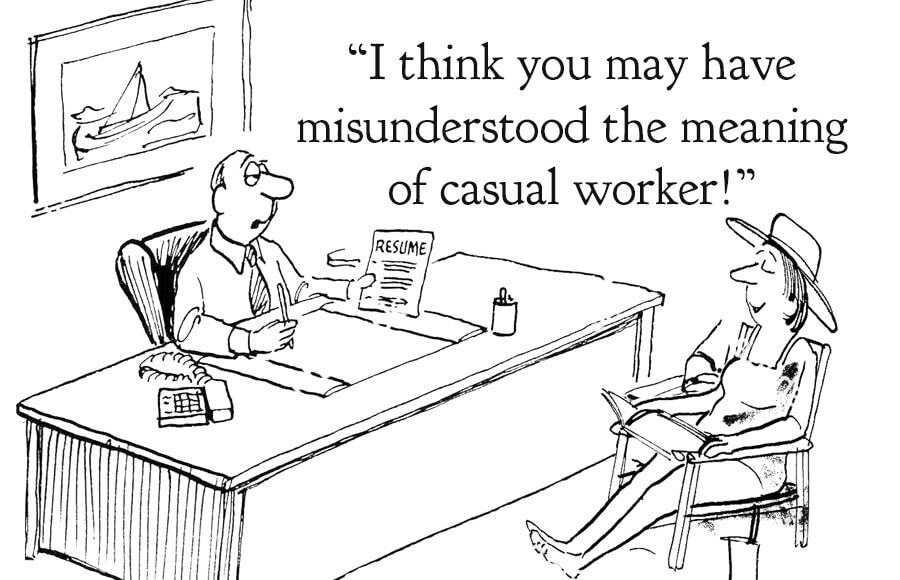
Labour Broking...the end?

Does this decision ring the bell on Labour Broking as we know it?

Multiple companies from the labour broking industry‚ which employs about one million people‚ believe the industry will continue to exist. 

Outsourced cleaners and security guards’ lives are not about to change dramatically after a Constitutional Court ruling on labour brokers.
The country’s apex court ruled last Thursday (26 August 2018) that workers earning under R205‚433 a year‚ provided by labour brokers to companies‚ should not be regarded as temporary workers after three months. This means they become permanent employees with job security from month four.
The case‚ brought by union Numsa against a labour broker company‚ made 22 employees permanent at a shelving company. Some unions said the ruling signalled the end of labour broking.
But lawyers and the temporary employment services (TES) industry disagree.
Multiple companies from the labour broking industry‚ which employs about one million people‚ believe the industry will continue to exist.
READ THIS…
What the judgment means
Legal firm Cliffe Dekker Hofmeyr said: "Whilst the court does not ban labour broking in its entirety; it aims to ensure that the provision of temporary services is truly temporary. Part of this protection entails that placed employees are fully integrated into the workplace as employees of the client after the three-month period."
Lawyer Craig Kirchmann‚ who was involved the case for the Confederation of Associations in the Private Employment Sector (CAPES) said: "The Constitutional Court ruling changes very little. It merely confirms that after three months employees have labour relation rights against the client (where they work). Ordinarily‚ the labour broker will remain the employer of the placed worker in terms of contract." 


Kirchmann said many companies would keep labour brokers to deal with human resources issues.
"If the labour broker‚ by agreement‚ falls out the picture‚ then the client will have to ensure that it has the necessary manpower and skills to deal with the management of the employees‚ all human resources related matters‚ payroll administration‚ up-skilling ability and the like. These are services generally rendered by the labour broker. There is a direct cost to the client/employer to ensure that such skills are available. Even then‚ labour brokers are specialists and generally perform such tasks better."
Kirchmann‚ speaking on the way unions viewed the judgment‚ said: "It is sad and unfortunate that unions are misconstruing the judgment. Labour representatives are suggesting that the judgment takes labour brokers out the picture after three months and hence it will be the end of the labour broking industry. This is clearly incorrect."
"The Constitutional Court has made it clear that labour brokers remain involved in a ‘triangular’ relationship … An objective assessment of the judgment reveals many positives for the industry and accordingly when disinformation is seen for what it is‚ the role of labour brokers will be appreciated."
Why cleaners and security guards are not all about to be insourced
Contrary to popular belief‚ outsourced cleaners and security guards are not seen as temporary employment services or staff provided by labour brokers‚ but are known as independent contractors‚ who are treated differently in the Labour Relations Act.
Kirchmann explained: "Ordinarily‚ cleaning and security staff are not labour broker employees. They are normally employees of outsourced companies which render a service (and do not supply placed workers to work directly for the client). The … judgment does not impact upon independent contractors such as security and/or cleaning companies."
Gavin Mulvenna from Kusile labour brokers said: "Genuine independent contracting arrangements‚ like often the case in the provision of cleaning and security services‚ remain unaffected and are not‚ as some may think‚ now required to be ‘insourced’. An independent contractor and a Temporary Employment Service are not the same thing and are treated differently in law … An independent contractor is specifically excluded from the definition of ‘employee’ per Section 213 of the Labour Relations Act."
Mulvenna explained further: "A temporary employee service procures and supplies labour for a fee. The independent contractor is not under my control as to how the work is done – all I want is the result. Conversely‚ persons supplied by a temporary employment service to the client‚ are under the control of the client – in respect of both what is done and how it is done."
Does the judgment say labour broking will end?
No. It says the "triangular relationship" between brokers‚ their employees and the client continues.
Paragraph 75 in the judgment states that: "This is not a transfer to a new employment relationship but rather a change in the statutory attribution of responsibility as employer within the same triangular employment relationship. The triangular relationship then continues for as long as the commercial contract between the TES and the client remains in force and requires the TES to remunerate the workers."
Adcorp Holdings‚ which provides such services‚ explained what that meant. "This confirms that the temporary employment services companies remain involved after the three-month period and that there is not a transfer of the employment relationship but rather a continuation of the triangular relationship between the TES and the client."
Legal firm Cliffe Dekker Hofmeyr said: "This triangular relationship then continues for as long as the commercial contract between the Temporary Employment Services (TES) and the client remains in force and requires the TES to remunerate the workers." 
30 July 2018 - 09:59BY KATHARINE CHILD


Tax Alert: South Africa’s employment tax incentive

Tax Alert: South Africa’s employment tax incentive Provided By  Eversheds Sutherland Eversheds Sutherland Represents The Coming To...